 Sourcebase
Source-based and journalist led.
A team of media and technology veterans rebuilding how information is sourced, analyzed, and published.
Every output traces back to identifiable source material, with a human in charge at every step.
What AI is good at
Searching and comparing far more material than any person could read unaided, and turning that research into useful work.
Where it fails
It can miss important records, misread context, repeat the errors in its sources and reach conclusions the evidence does not support. For work that depends on getting it right, that is a liability.
What we built
A system that captures the first without asking anyone to take its assertions on faith. Outputs connect to identifiable material, and that material stays open for inspection.
Media and technology veterans
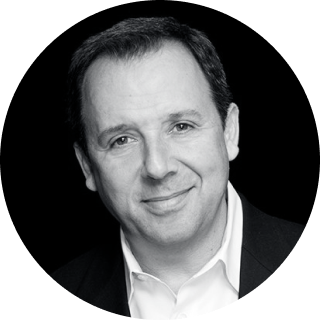
Ron Suskind
Pulitzer winner, award-winning author & film producer, 5 tech patents.

John Nguyen
Co-founded Vlingo, acquired by Samsung.
Winston Chen
Founder & CEO of Voice Dream, Apple Design Award winner.

Michael Caruso
Former CEO and Editor of Smithsonian and The New Republic.
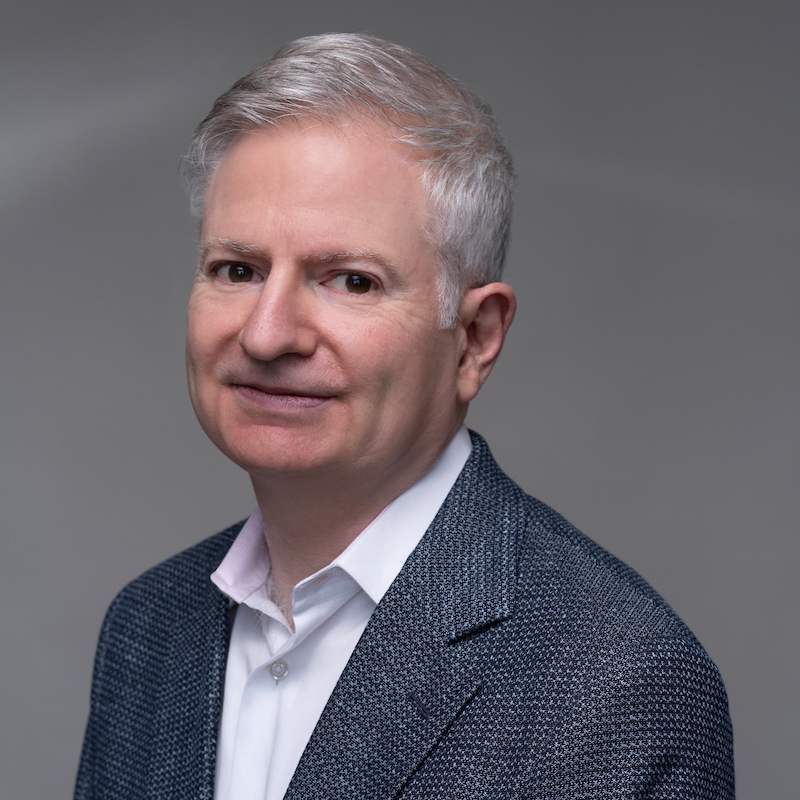
Glenn Kessler
Editor and chief writer of The Washington Post Fact Checker.
“I’ve also been using this program called Sourcebase.ai. You could say, look, I want to know everything about this prison guard, for example, and they’ll find everything in a way that I might not have been able to find it.”
A source is not the same thing as the truth.
A citation establishes where information came from. It does not establish that the information is correct.
Sources can be wrong, incomplete, outdated, partisan or disputed. A complaint contains allegations. A witness can be mistaken. An official statement may present one side. Even authoritative databases carry bad entries.
So we separate two jobs: representing a source accurately, and deciding whether what it says is true. Sourcebase is built to do the first well and to be honest that it cannot do the second.
Credibility, corroboration and significance stay with the person doing the work. Traceability makes verification faster. It does not make verification unnecessary.
How the system is built
Six principles we design and test against.
Evidence before assertion
Answers and drafts are grounded in identifiable material rather than a model's general memory. Citations lead to the passage, page, record or timestamp behind a claim. When adequate support isn't there, the system is built to say so rather than invent it.
Curation is an editorial act
What a system can find is bounded by what it was given to search. For every Sourcebase collection you can see what it holds, the period it covers, how it was assembled and where the known gaps are. A well-supported answer can still be incomplete.
Conflict is preserved, not resolved
When significant sources disagree, the system surfaces the disagreement instead of quietly adopting the version that reads cleaner. Qualifications in the evidence are kept. Analysis is presented as analysis, not as another sourced fact.
Distinctions that matter are held
An allegation does not become fact because it appears in an official document. A prediction does not become an outcome. Where the evidence permits several readings, the uncertainty stays visible rather than getting written away.
Checks you can inspect
Source grounding, citation verification, review by separate agents, contradiction detection and preserved workflow histories. These reduce risk rather than remove it, which is why every output exposes the evidence it rests on.
Judgment stays human
Agents can run parts of a workflow on their own. Autonomy in performing a task is not authority over the decision. Story selection, fairness, characterization of disputed facts and the call to publish remain yours.
For every Foundry output, we give the publisher a record of how that output was produced, so disclosure decisions are theirs to make with the facts in hand.
Get in touch
Questions, press, enterprise, or a collection you think we should build.