Discover the story in the sources.
Sourcebase searches troves of millions of documents and transcripts no team could read in a lifetime , answers any question with a citation down to the exact page, paragraph, or timestamp , reads documents, audio, video, and structured data together in one collection , and powers Sourcebase News, where every article publishes with its sources .
Click any citation to learn more.
Ask a whole collection your question. Every answer links to the exact page, paragraph, or timestamp, so you can read the source yourself.
Latest updates
New and updated collections as they go live.
Built for the work of reporting
A two-minute deadline check and a six-month investigation run on the same source base.
Newsroom investigations
Dig through large collections for the details others miss. Track findings across every document with exact citations.
Daily reporting
Ask a quick question on deadline and get a cited answer in seconds, sourced from the material you trust.
Fact-checking and verification
Trace any claim back to the document, page, or timestamp behind it, and confirm what the source actually says.
Research and backgrounding
Build the full picture on a person, place, or topic from everything in the collection before you write.
“I’ve also been using this program called Sourcebase.ai. You could say, look, I want to know everything about this prison guard, for example, and they’ll find everything in a way that I might not have been able to find it.”
Watch it work a real case
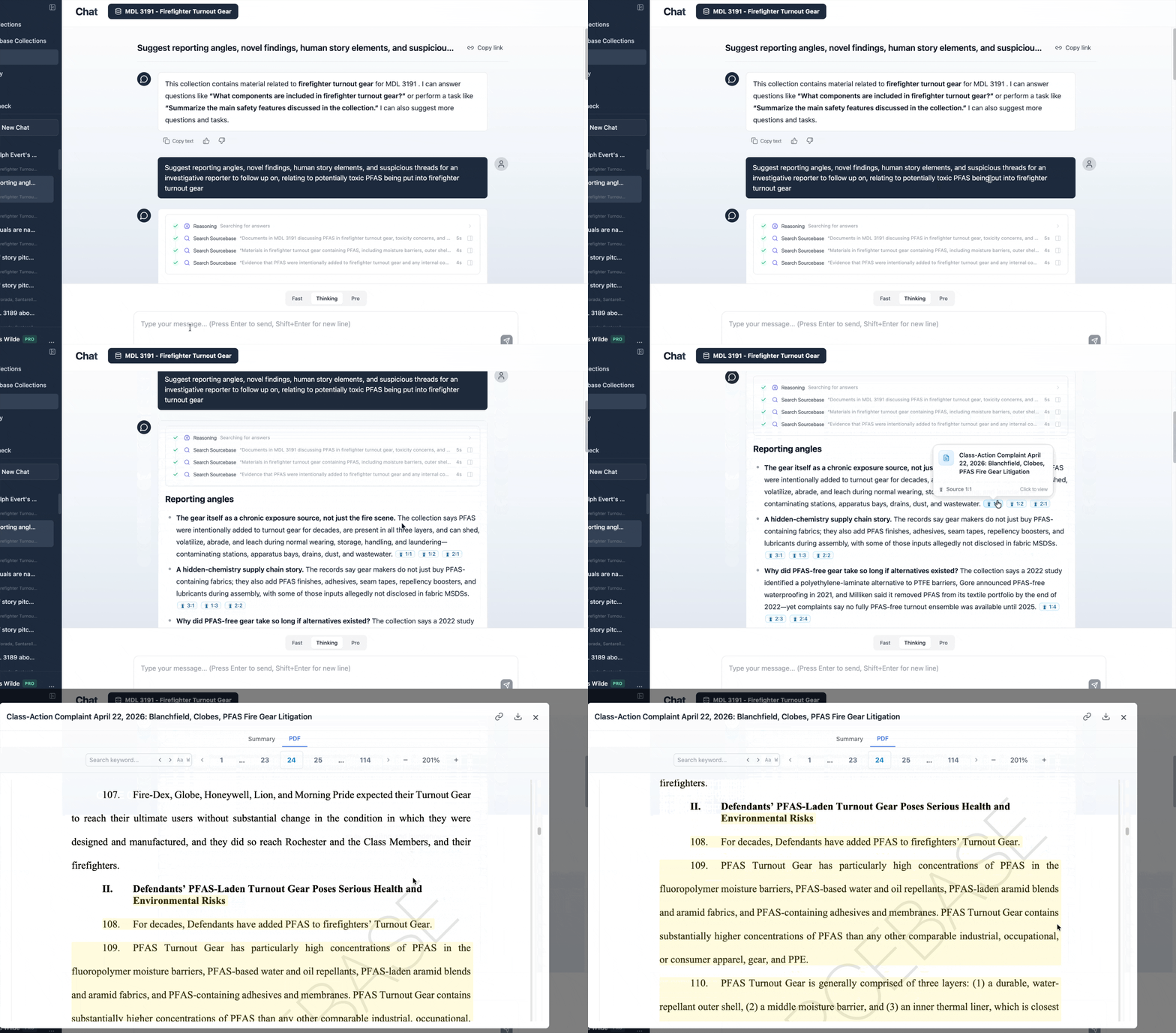
Sourcebase scanning a collection of federal court documents for reporting angles, showing every search it runs along the way.
Why not a general chatbot?
A typical chatbot's answer sounds plausible and confident. Plausible isn’t the standard when the work is reporting.
 Sourcebase
Even when it links to sources, you’re re-reading whole articles to check a single claim.
One click opens the exact page, paragraph, or timestamp behind every answer.
A summary of the document — or, in tools like NotebookLM, a messy extract of its text.
The real, original document, in full context. You read what Sourcebase reads.
You invent your own prompts and repeat yourself every time you start a new thread.
Tools already built for a reporter’s workflow, on collections tested past 20,000 files.
The tools inside Sourcebase
Cited answers from your sources, the tools to build the collections they run on, and the newsroom that shows what they can do.
Research
Ask a question to a collection and get an answer cited to the exact page, paragraph, or timestamp.
See ResearchSourcebase News
Original reporting by journalists and editor-verified roundups, published with their sources.
See Sourcebase NewsBuild and manage
Bring your own archive of text, audio, and data into one or many searchable collections.
See Build and manageRead us on Substack
Our Substack is separate from Sourcebase News. It carries our Original Reporting alongside interviews, videos and discussions with Glenn Kessler and Ron Suskind.

Glenn Kessler
Wrote The Fact Checker for The Washington Post from 2011 to 2025, after serving as its diplomatic correspondent. Author of The Confidante.
Ron Suskind
Pulitzer Prize-winning journalist and best-selling author of The Price of Loyalty, The One Percent Doctrine and Life, Animated.
How our roundups are made
Each roundup is drafted from a defined Sourcebase collection, then checked, revised and approved by a human editor before it publishes.
Not just documents
Spreadsheets, documents, and the open web sit in one collection. A single question searches across all of them.
Federal spending data
Six million rows across 300 columns of raw U.S. Treasury spending, queried alongside the reporting that explains it.
Match data and coverage
More than 100,000 rows of World Cup results sitting beside 17,000 articles, cross-referenced in one query.
Spreadsheets and filings
125 spreadsheets and 1,300 immigration reports, analyzed together into answers you can cite.
Collections in action
Our expertly curated public troves that are ready to search for free.

The Epstein Files
Over 3.5 million pages of court documents and emails, spanning the late 1990s through 2024, every answer cited to the page.
Ask Trump
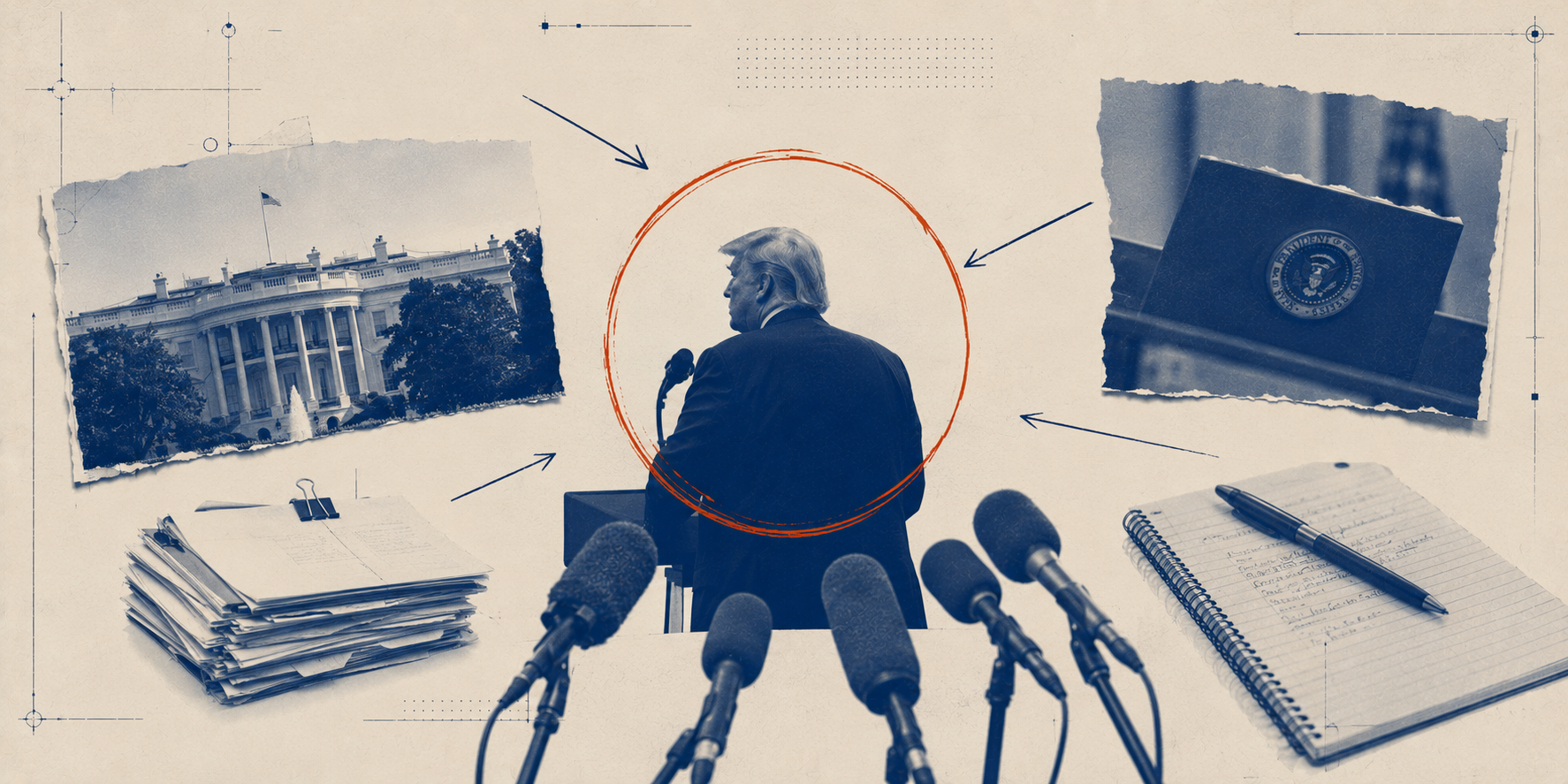
Query transcripts from every speech and statement since 2007, plus all 34,000+ of his Truth Social posts, with timestamped citations. Updated daily.
Put your sources to work
Open the console to search a public collection, or bring your own documents and start reporting.
Tools built for discovery
Sourcebase reads through collections too large to comb by hand. You point it at the question, check what it finds, and bring the editorial judgment.
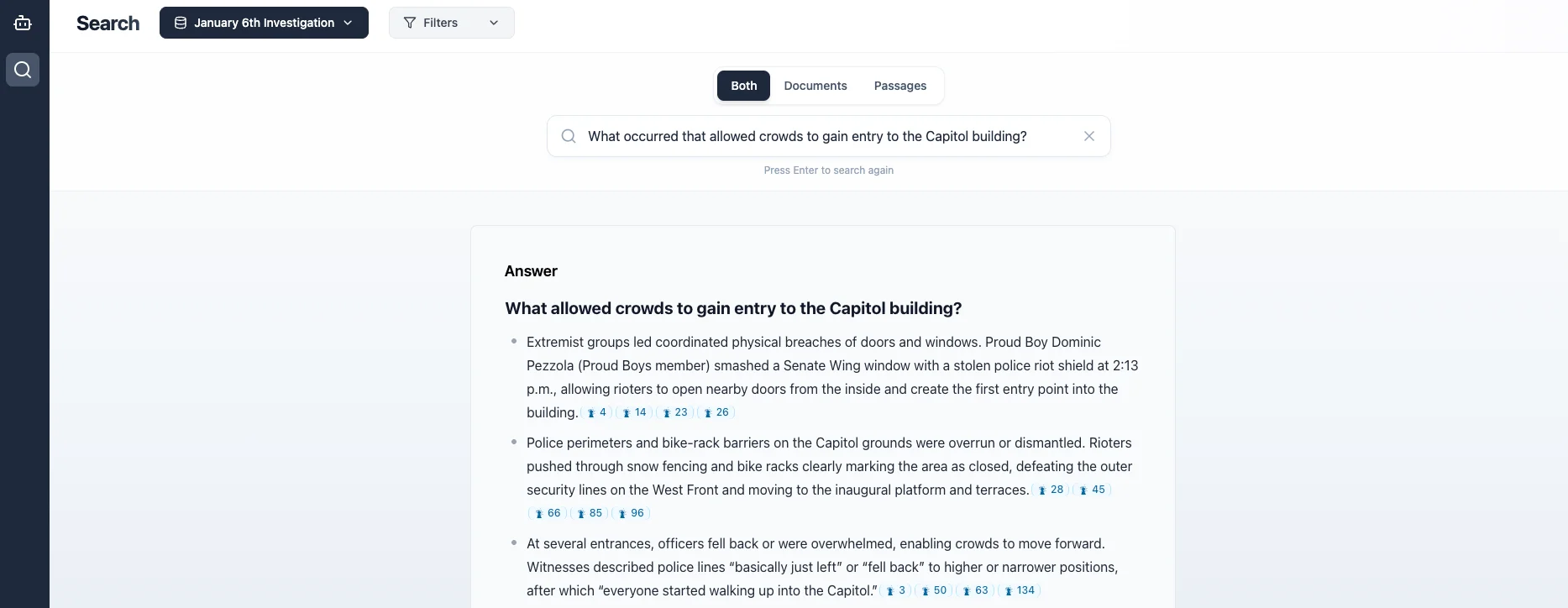
Research in plain language
Journalists and readers ask questions and get answers grounded in original sources, with citations that link to the exact page, paragraph, or timestamp.
Follow up, dig deeper, ask for clarification. Sourcebase keeps context across the conversation so you can explore a document set thoroughly.
- Answers always grounded in original sources
- Citations link directly to the source material
- Fast, Thinking, and Pro modes for any depth
- Turn on web search to check the open web
Find the details that matter
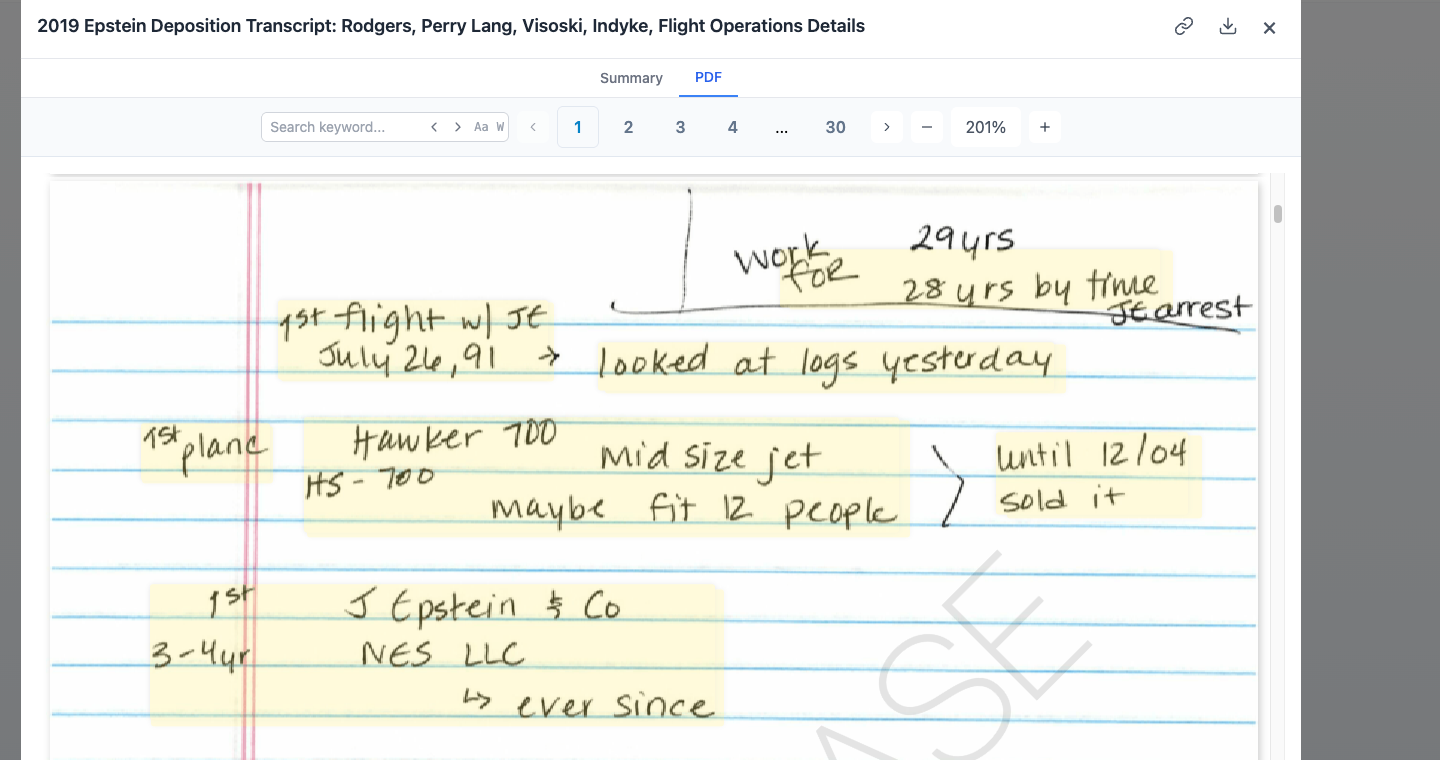
Surface newsworthy information in any large trove of documents. Hybrid search combines semantic and keyword matching, with freshness ranking and query rewrite.
Match against individual passages with precision, then summarize entire collections of effectively unlimited size.
- Hybrid search across semantic and keyword
- Passage-level matching for precise citations
- Summarize collections at any scale
- Query structured datasets and tables, not just text
- Share structured-data citations or export them as CSV
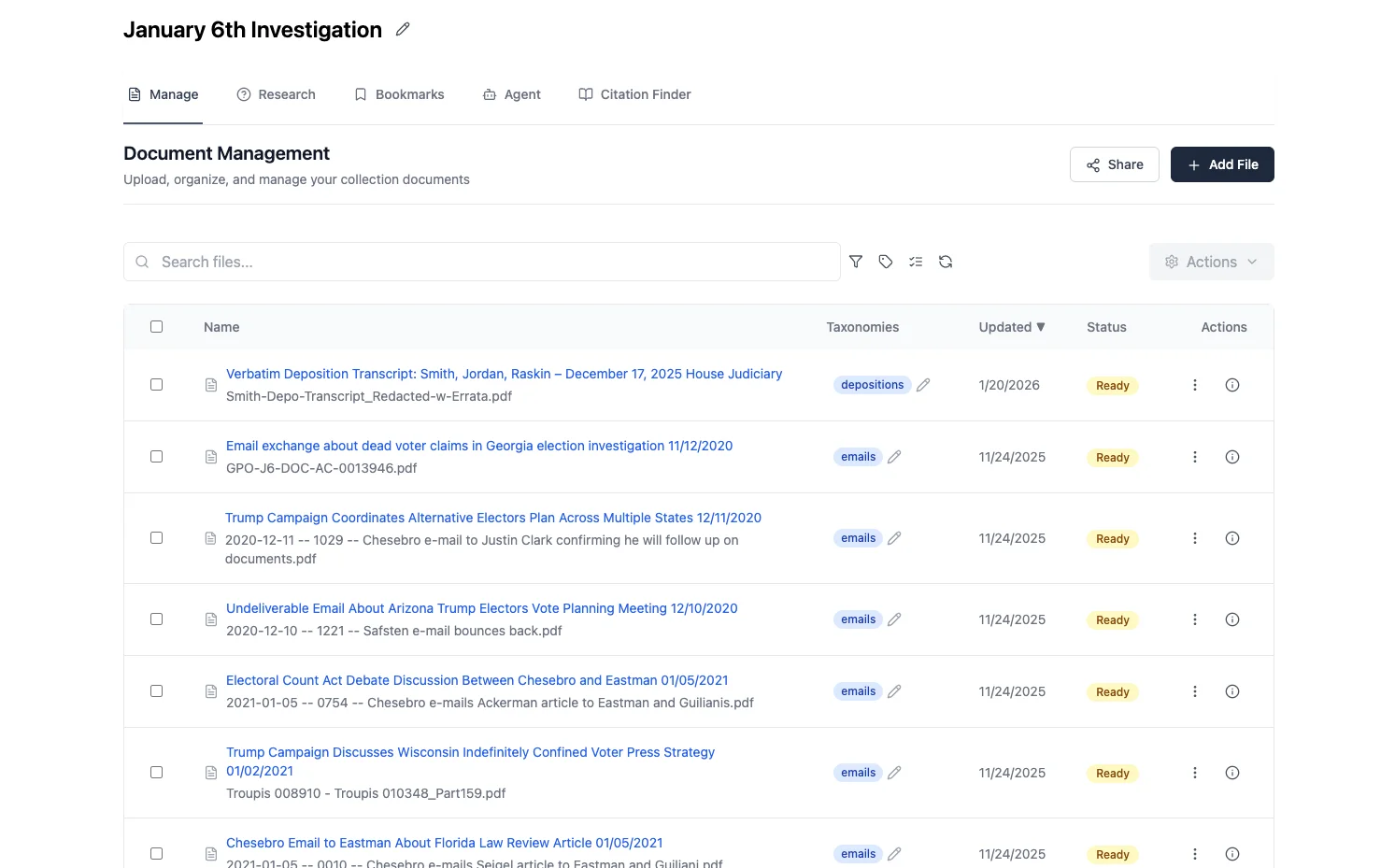
Build and manage your own collection
Our architecture scales on demand, holding video, audio, text, and images in one collection with full context. Tested past 20,000 files.
Curate your own collections, or have our team build custom ones for your organization. Enterprise ready with SSO, security, and governance.
- One collection for audio and text
- White-glove collection curation available
- Enterprise SSO, security, and governance
See it in the reporting
Sourcebase News publishes original reporting by journalists and roundups verified by human editors, each with its sources attached.

We publish two kinds of stories. Both are built on primary records and published with their sources.
Original Reporting
Journalism grounded in evidence, researched with Sourcebase tools and written by reporters. Not AI-generated.
Read Original ReportingRoundups
Recurring roundups. Sourcebase gathers the sources and writes a draft. An editor checks it, revises it and publishes it.
Read the roundupsRead us on Substack
Our Substack is separate from Sourcebase News. It carries our Original Reporting alongside interviews, videos and discussions with Glenn Kessler and Ron Suskind.
Glenn Kessler
Wrote The Fact Checker for The Washington Post from 2011 to 2025, after serving as its diplomatic correspondent. Author of The Confidante.
Ron Suskind
Pulitzer Prize-winning journalist and best-selling author of The Price of Loyalty, The One Percent Doctrine and Life, Animated.
How our roundups are produced
Each roundup starts with Sourcebase and ends with an editor. Here is how it works for Trump Overnight.
- Gather the sources. Each roundup draws from a defined Sourcebase collection. The Trump Overnight collection holds every Truth Social post by Donald Trump, more than 34,000, and around 7,000 videos of his public appearances since 2007.
- Prepare the draft. The Sourcebase agent prepares a draft from the collection, with citations pointing to the passages behind its claims.
- Verify and revise. A human editor checks the claims and citations, looking for errors, missing context and conclusions that go further than the documents allow. They can cut, rewrite and add their own analysis, and they are responsible for the finished piece.
- Publish with sources. The finished roundup includes its sources so readers can examine the evidence themselves.
AI on a leash
We do not use AI to fill gaps in the evidence. This applies to both our Original Reporting and our roundups.
- Allegations are described as allegations.
- A source must support the statement attached to it.
- If a claim cannot be supported, it does not belong in the article.
- When a published statement is wrong or unsupported, we correct it in place and add a dated note explaining the change.
Our curated collections
Expertly curated public collections for reporters and researchers. Connect one and start working immediately, or build your own.
Browse by subject
Public collections grouped by subject, with new ones added regularly. Open any subject in the console for the full, current list.
50+ public collections·10M+ pages and transcripts·30+ datasets and spreadsheets·new ones added every week
U.S. Code, The Epstein Files, JFK Assassination Files, and more.
Trump v. United States, Loper Bright v. Raimondo, United States v. Skrmetti, and more.
Ask Trump, January 6th Investigation, Project 2025, and more.
Big Tech Antitrust, Facebook Whistleblower Files, Meta's Child Safety Research, and more.
Artificial Food Dyes, Fluoride in Drinking Water, “Forever Chemicals” Research, and more.
Upload your own archive of documents, audio, and data, or have our team curate a private collection for you.
Start a collectionSource-based and journalist led.
A team of media and technology veterans rebuilding how information is sourced, analyzed, and published.
Every output traces back to identifiable source material, with a human in charge at every step.
What AI is good at
Searching and comparing far more material than any person could read unaided, and turning that research into useful work.
Where it fails
It can miss important records, misread context, repeat the errors in its sources and reach conclusions the evidence does not support. For work that depends on getting it right, that is a liability.
What we built
A system that captures the first without asking anyone to take its assertions on faith. Outputs connect to identifiable material, and that material stays open for inspection.
Media and technology veterans
Ron Suskind
Pulitzer winner, award-winning author & film producer, 5 tech patents.

John Nguyen
Co-founded Vlingo, acquired by Samsung.

Winston Chen
Founder & CEO of Voice Dream, Apple Design Award winner.

Michael Caruso
Former CEO and Editor of Smithsonian and The New Republic.
Glenn Kessler
Editor and chief writer of The Washington Post Fact Checker.
“I’ve also been using this program called Sourcebase.ai. You could say, look, I want to know everything about this prison guard, for example, and they’ll find everything in a way that I might not have been able to find it.”
A source is not the same thing as the truth.
A citation establishes where information came from. It does not establish that the information is correct.
Sources can be wrong, incomplete, outdated, partisan or disputed. A complaint contains allegations. A witness can be mistaken. An official statement may present one side. Even authoritative databases carry bad entries.
So we separate two jobs: representing a source accurately, and deciding whether what it says is true. Sourcebase is built to do the first well and to be honest that it cannot do the second.
Credibility, corroboration and significance stay with the person doing the work. Traceability makes verification faster. It does not make verification unnecessary.
How the system is built
Six principles we design and test against.
Evidence before assertion
Answers and drafts are grounded in identifiable material rather than a model's general memory. Citations lead to the passage, page, record or timestamp behind a claim. When adequate support isn't there, the system is built to say so rather than invent it.
Curation is an editorial act
What a system can find is bounded by what it was given to search. For every Sourcebase collection you can see what it holds, the period it covers, how it was assembled and where the known gaps are. A well-supported answer can still be incomplete.
Conflict is preserved, not resolved
When significant sources disagree, the system surfaces the disagreement instead of quietly adopting the version that reads cleaner. Qualifications in the evidence are kept. Analysis is presented as analysis, not as another sourced fact.
Distinctions that matter are held
An allegation does not become fact because it appears in an official document. A prediction does not become an outcome. Where the evidence permits several readings, the uncertainty stays visible rather than getting written away.
Checks you can inspect
Source grounding, citation verification, review by separate agents, contradiction detection and preserved workflow histories. These reduce risk rather than remove it, which is why every output exposes the evidence it rests on.
Judgment stays human
Agents can run parts of a workflow on their own. Autonomy in performing a task is not authority over the decision. Story selection, fairness, characterization of disputed facts and the call to publish remain yours.
For every article Sourcebase helps produce, we give the publisher a record of how that output was produced, so disclosure decisions are theirs to make with the facts in hand.
Get in touch
Questions, press, enterprise, or a collection you think we should build.
What's new
New and updated collections as they go live.
Plans that scale with the work
Start free to prove the value on public collections. Step up to Pro for serious research, or talk to us about a private deployment for your whole organization.
- Select public collections
- 40 research turns (lifetime)
- 20MB uploads
- All Sourcebase collections
- 1,000 research turns / month
- 1GB uploads / month
- Full platform access
- Custom knowledge bases
- Private data ingestion
- White-label options
- Dedicated support & SLA
Bring Sourcebase to your newsroom
Private collections, your own archive at any scale, and security built for organizations. Tell us what you need.